

October 24, 2025
The Hydration Imperative
When it comes to endurance performance, especially in running, hydration isn’t just a suggestion—it’s the single most important factor. But why is something so simple so critical to your success?
Simple water is essential, but high-intensity exercise creates unique absorption challenges (gastric distress, “sloshing,” rapid excretion). Introducing a superior hydration delivery system, Aqua-Gard. This article will break down the fundamental hydrogel science and explain how Aqua-Gard provides water-like hydration with enhanced efficiency.
The Challenge of Hydrating on the Run
Fueling and hydrating during a run can be a tricky balance, but understanding the science behind how your body absorbs fluids is the first step to avoiding GI distress and optimizing performance. Let’s break it down:
- Osmosis and Absorption: Think of your gut lining as a busy gatekeeper. To get water to move from your intestines into your body, the gut first has to create a “pull.” It does this by actively pumping tiny particles like sodium and glucose from the food you’ve digested into the cells of your gut lining.
This pumping action creates an imbalance, or a “gradient.” Suddenly, there are a lot of these particles inside your gut cells and very few outside in your intestines. Because water always tries to balance things out, it naturally rushes from the area where there are fewer particles (your intestines) to the area where there are more (your gut cells). This is a passive process, so it doesn’t require extra energy—water simply follows the particles.
- Isotonic vs. Hypertonic: Tonicity refers to the concentration of solutes in a solution relative to another solution, in this case, your body’s blood and cells. When you drink, your body needs to maintain a delicate osmotic balance for proper fluid absorption. This is where the difference between isotonic and hypertonic drinks becomes crucial. The issue with many sugary drinks—they are hypertonic and can draw water into the gut, causing cramps.
- The Need for Neutrality: For a runner, an ideal hydration and fuel source needs to be close to isotonic for rapid gastric emptying. Because its solute concentration is similar to your body’s, an isotonic solution doesn’t require extra energy to absorb and can move quickly from the stomach to the intestine, providing both hydration and fuel without causing stomach upset. This rapid absorption is crucial for maintaining performance during a run when the digestive system is under stress.

The Core Science: What is a Hydrating Gel?
When we think of hydration on the run, most of us picture a drink, but what if we told you the future of hydration might be in a gel? Let’s dive into the science behind a new kind of fuel—a hydrating gel—and explore how it works on a molecular level.
What are hydrogels? A hydrogel is a three-dimensional network of hydrophilic (water-attracting) polymers, creating a stable, semi-solid structure. Imagine a tangled molecular cage or a sponge at a microscopic level. Some plastics and gels are considered hydrophilic polymers because they are “water-loving” materials. These materials have a strong attraction to water because of certain chemical groups within their structure, such as hydroxyl groups (-OH) and carboxyl groups (-COOH). These groups have a special kind of charge imbalance, called polarity, which makes them behave like tiny magnets for water molecules, allowing the polymers to absorb and hold onto a lot of water.This unique structure allows the hydrogel to retain significant moisture and maintain its form without dissolving.
One example of this innovative approach is Aqua-Gard, a hydrating gel that uses a specialized hydrogel matrix to deliver fluids and nutrients.
The key to Aqua-Gard’s effectiveness lies in its unique matrix, which is formed by a combination of plant-based and specialized carbohydrates. Most modern hydrating gels, rely on a blend of simple and complex carbohydrates like maltodextrin and fructose. These carbohydrates, often in a 2:1 glucose-to-fructose ratio, are not only a primary energy source but also play a critical role in forming the hydrogel itself. Other common plant-based compounds used in hydrogels are sodium alginate and pectin. These polymers gelate upon contact with the low pH of the stomach, forming a protective, encapsulated structure. This “molecular cage” holds water and electrolytes, helping to ensure rapid and gentle absorption into the intestines without the gastric distress associated with sugary, hypertonic liquids.
How Aqua-Gard Mimics Water (The Absorption Mechanism)
Traditional running fuels can often upset your stomach, but a new class of products is changing the game by leveraging a clever approach to hydration. This section will explore how a product like Aqua-Gard works with your body’s natural systems to deliver what you need, when you need it, and without gastric distress.
The Stomach Bypass
A key feature of Aqua-Gard and other hydrating hydrogels is their ability to bypass the stomach without causing issues. Traditional sugary sports drinks are often hypertonic, causing your stomach to pull water from your bloodstream to dilute them, leading to delayed gastric emptying and cramps. By contrast, Aqua-Gard is a low-viscosity gel that is nearly pH-neutral. This structure allows the product to pass through the acidic stomach environment quickly, minimizing the time it spends there and avoiding the osmotic shock that can cause GI issues during a run.
Intestinal Breakdown and Release
Once the hydrogel leaves the stomach and enters the small intestine, it’s designed to break down and release its contents. The primary trigger for this is a change in the environment’s pH. The small intestine is naturally less acidic (more alkaline) than the stomach. This change in pH acts as a signal for the hydrogel’s polymers, causing them to break apart and release the encapsulated water, electrolytes, and carbohydrates. Other triggers, such as the presence of digestive enzymes, can also contribute to this breakdown. The disintegration of the gel allows for the controlled, rapid release of clean fluids and nutrients, ready for immediate absorption into the bloodstream.
The Water-Like Efficiency
Because the fluid and electrolytes are released in a controlled manner directly into the small intestine, the body can absorb them with remarkable efficiency, avoiding the osmotic issues caused by traditional concentrated drinks. The process mimics the way your body absorbs plain water, but with the added benefit of essential electrolytes and carbohydrates. This structured delivery system prevents the “sloshing” feeling and GI distress often associated with drinking large quantities of liquid while running, allowing for a comfortable and highly effective hydration experience.
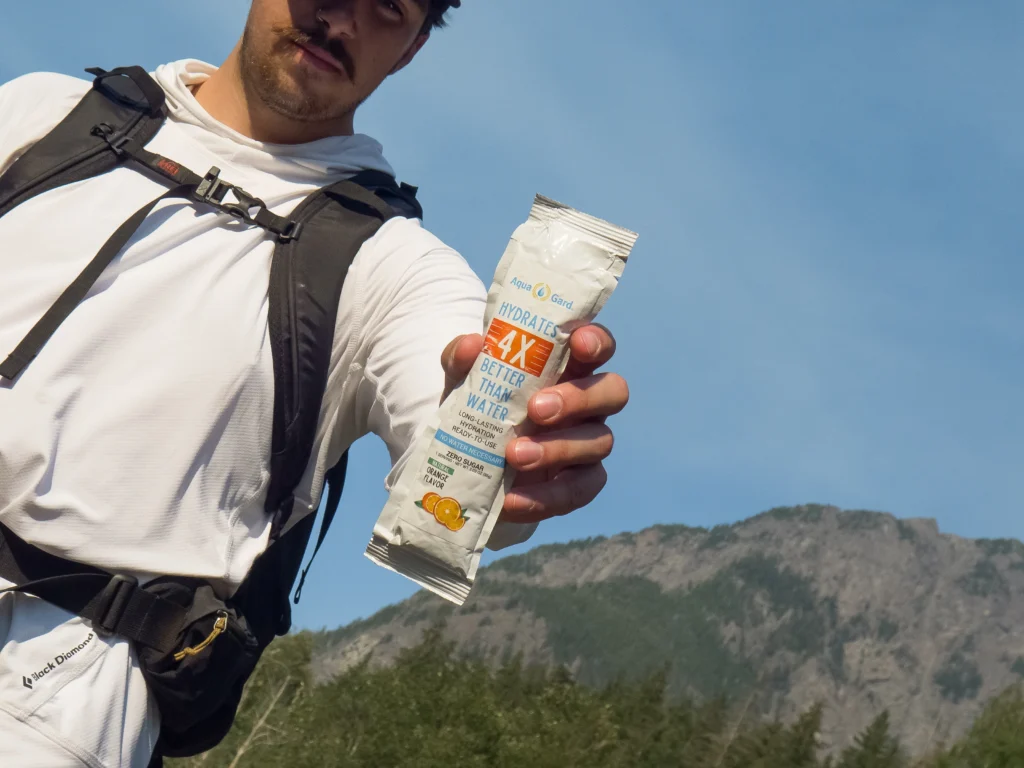
The Practical Benefits for Runners
Runners know all too well the unpredictable nature of their gut during a race. This section dives into the tangible benefits of using a hydrating gel, revealing how a smart scientific approach can translate into a more comfortable and powerful run. Below are three main areas hydrogels impact:
- GI Comfort: Gastrointestinal (GI) distress is a common and unwelcome companion for many runners, with symptoms like cramping, bloating, and nausea often brought on by the combination of jostling motion and reduced blood flow to the gut during exercise. By providing a clean, isotonic solution, a hydrating gel can help runners avoid these issues. The gel’s composition allows it to be absorbed efficiently, bypassing the digestive issues that often occur with hypertonic liquids or solid foods, and thus provides a smoother fueling experience that minimizes the risk of a runner’s most feared mid-race ailment: stomach cramps.
- Dual Purpose: Many energy gels on the market are designed to provide carbohydrates for energy, but a hydrating gel goes a step further by also addressing a runner’s need for fluid and electrolytes. This makes it a true dual-purpose fuel, delivering a powerful punch of carbohydrates to replenish depleted glycogen stores while simultaneously providing the water and salts necessary to maintain proper hydration.
- Sustained Performance: When you become dehydrated, your blood volume decreases, forcing your heart to work harder to pump the same amount of oxygenated blood. By delivering fluids and electrolytes in a predictable and efficient manner, a hydrating gel helps maintain consistent blood volume, preventing a drop in performance and allowing you to sustain your pace and effort over a longer duration.
The Hydrogel Advantage: Simplified Science, Superior Performance
In summary, the revolutionary hydrogel structure of Aqua-Gard is the core of its effectiveness, allowing it to bypass the typical absorption and gastric-emptying bottlenecks that hinder traditional hydration gels. This innovative approach proves that better science can directly translate into better running performance. We encourage you to reconsider your current hydration strategies, put Aqua-Gard to the test on your next long run, and experience the difference yourself!

Related Posts

Feb. 20, 2026
Heart Health for High-Performers: Why Your Next Adventure is a Lifesaver

Feb. 18, 2026
Black Inventors in Water Sanitation: Celebrating Innovation During Black History Month

Feb. 03, 2026
The Anatomy of an Experience: Scaling Adventure from Box to Battlefield
Jan. 13, 2026
The “Fill-and-Forget” Strategy: Why Every Go-Bag Needs a Collapsible 2.5 Gallon Water Bag Solution

Dec. 12, 2025